
On this page
What are the EPC requirements for sellers, landlords and builders?Why do landlords need an EPC?What does an EPC mean for buyers and tenants?What do you learn from an EPC?What happens if you do not have an EPC?Do homeowners need an EPC if they are not selling?Where can you look up an existing EPC?How can I arrange an EPC?FAQs about why do I need an EPC?Sources
Checks Sorted does not carry out EPC assessments or issue certificates itself. We match your enquiry with a participating independent professional, where we can.
Key facts
- You must have an EPC when you are selling, renting out or building a property, says GOV.UK.
- An EPC rates a property from A (best) to G (worst) and is valid for 10 years.
- The seller, landlord or letting agent must show you the EPC if you are buying or renting, and a valid EPC must be given free of charge to the person who becomes the buyer or tenant in England and Wales.
- In England and Wales the penalty is £200 for a dwelling, and an advert must show the rating, with a £200 fine per advertisement if it does not.
- You do not need an EPC just to live in your own home, because existing occupiers only need one if they sell, assign or sublet.
What are the EPC requirements for sellers, landlords and builders?
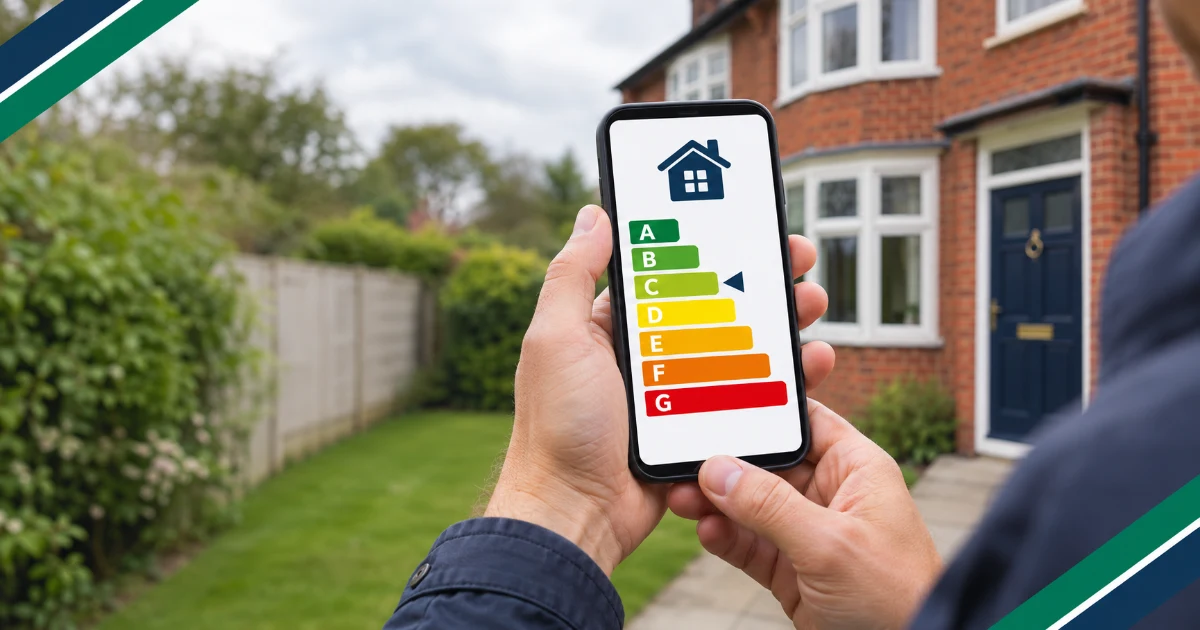
The EPC requirements fall on whoever sells, rents out or builds the property, not on the person who lives in it. In England and Wales the seller or landlord must make an EPC available at the earliest opportunity, and no later than when a person asks for information about the building or asks to view it, says GOV.UK’s guidance for dwellings. The table shows when you need an EPC and the main duties by nation.
| Who | What the official pages say | Source |
|---|---|---|
| Seller or landlord, England and Wales | Order an EPC for potential buyers and tenants before you market the property. A valid EPC must be given free of charge to the person who ultimately becomes the buyer or tenant | GOV.UK |
| Builder of a new property | You must have an EPC when you are building a new property | GOV.UK |
| Scotland | An EPC in Scotland must be displayed somewhere in the property, and the energy report in the Home Report is the EPC | GOV.UK and mygov.scot |
| Northern Ireland | An EPC is needed whenever a property is built or marketed for sale or rent, and a buyer or new tenant should be given it at no cost | nidirect |
For the details on timing and who pays, our guide on EPC rules for selling covers each nation, and when no EPC is needed lists the energy performance certificate exemptions.
Why do landlords need an EPC?
Landlords need an EPC certificate for a rental property, both to let it and to meet the minimum EPC rating for rental. In England and Wales a landlord cannot let a property covered by the MEES Regulations with an EPC rating below E unless there is a valid exemption, says the GOV.UK landlord guidance.
The rule bites before a new tenancy starts. If you plan to let a property with an EPC rating of F or G, the guidance says you need to improve its rating to E, or register an exemption, before you enter into the tenancy.
The EPC requirements for landlords are due to rise. GOV.UK says the government confirmed on 21 January 2026 that the standard will increase to EPC C from 1 October 2030, and the existing standard of E continues until then.
What does an EPC mean for buyers and tenants?
Buyers and tenants should ask to see the EPC because it lets them compare how efficient the properties they are considering are, and see how much it may cost to heat and light a building before they enter into a contract, says nidirect. You do not have to hunt for it, because GOV.UK says the person selling the house, the landlord or the letting agent must show you the EPC if you are buying or renting.
In England and Wales an advert for a sale or rent must also state the rating shown on the EPC, for example C, and failing to do so could mean a fine of £200 per advertisement, says the dwellings guidance. If a listing and the certificate look different, our guide on how to check EPC rating shows how to look up the register.
What do you learn from an EPC?
An EPC tells you how energy efficient a property is. EPC ratings run from A, the most efficient, to G, the least efficient, and the certificate adds an estimate of its energy costs and carbon dioxide emissions. nidirect says it also shows how efficient the property could be if some improvements are carried out, such as replacing lighting with low energy bulbs or upgrading insulation.
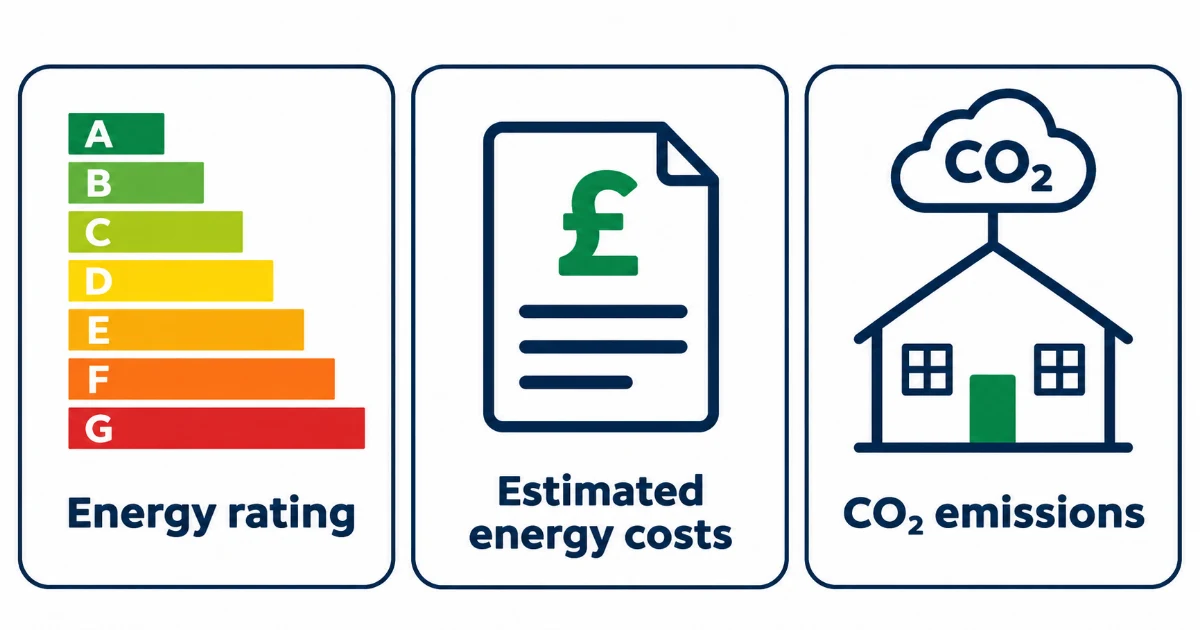
The report with the EPC lists the cost effective measures to reach a better rating, and for each one it gives an indicative cost, typical savings and the rating after improvement, says GOV.UK’s guidance for dwellings. The same guidance says there is no statutory requirement for a homeowner to carry out the recommended measures. Our guide on how EPC ratings are calculated explains how the score and band are worked out.
The Scottish Government says an EPC does not contain personal information, other than the name and contact details of the assessor who carried it out, so sharing the certificate does not expose the owner or occupier. It also says standard assumptions are made about occupancy and use, which is why your actual energy bills can differ from the EPC estimates.
What happens if you do not have an EPC?
If you do not have an EPC when you need one, you can be fined. In England and Wales the penalty charge is £200 for a dwelling, under regulation 38 of the Energy Performance of Buildings (England and Wales) Regulations 2012, and between £500 and £5,000 for a building that is not a dwelling.
GOV.UK’s guidance for dwellings says local weights and measures authorities, known as Trading Standards, have a duty to enforce most EPC obligations. In Northern Ireland, nidirect says not having an EPC could lead to enforcement action and a penalty charge notice, and district councils enforce it.
If you believe a penalty charge notice should not have been issued, you can request a review from the local authority. If you are not satisfied after the review, you can appeal to the county court within 28 days, beginning on the day after the notice is received, says the same guidance.
Do homeowners need an EPC if they are not selling?
No, you do not need an EPC just to live in your own home. The dwellings guidance says existing occupiers and tenants will not require an EPC unless they sell, assign or sublet their interest in a building. An existing EPC can still help you plan improvements, but a homeowner has no statutory requirement to carry them out.
So, do I need an EPC? Not while you live in the property, but the position changes when you sell or rent it. GOV.UK says you must order an EPC for potential buyers and tenants before you market it, so it helps to check early whether a valid one already exists. An EPC is valid for 10 years.
Where can you look up an existing EPC?
To check whether a property already has an EPC, search for it on the GOV.UK find an energy certificate service, which covers England, Wales and Northern Ireland, or on the Scottish EPC Register for Scotland. GOV.UK says that if your property does not appear in the service, you may need a new EPC.
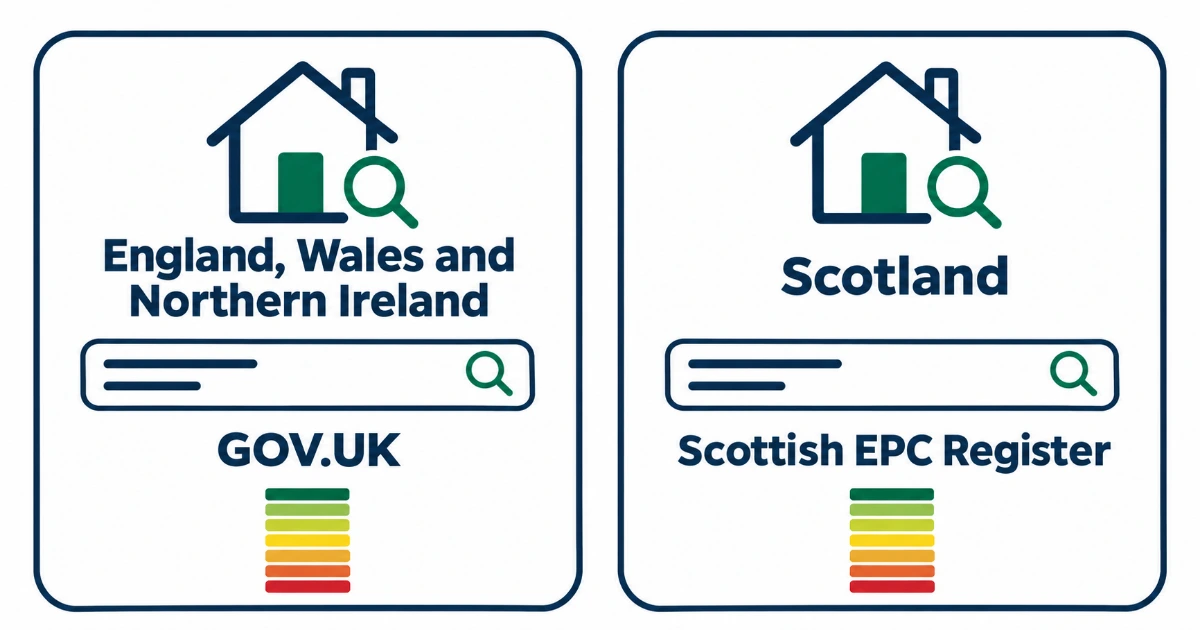
You can search by postcode, by street name and town, or by certificate number, and the service only lists properties with an EPC. The Scottish register searches by postcode or by the 20 digit report reference number.
A valid EPC lasts 10 years, or until a newer EPC is produced for the same building, so an existing certificate can be reused when the property is sold or rented again. Our guide on how long an EPC lasts explains expiry and renewal.
How can I arrange an EPC?
To arrange an EPC, send Checks Sorted one enquiry. We match it with a participating independent professional covering your area, where we can, but we do not visit or assess properties ourselves. You can also find an accredited assessor yourself in England, Wales or Northern Ireland. There are four steps:
- State what you need
Select the property safety service you require. - Say where the property is
Enter its postcode and any relevant details. - Get your match
Checks Sorted picks an appropriate participating professional for the service and location. - Discuss the job
The professional gets in touch about availability, price and the work required.
FAQs about why do I need an EPC?
Is an EPC a legal requirement?
Yes, an EPC is a legal requirement when you sell, rent out or build a property, according to GOV.UK. An EPC certificate is not a requirement just for living in your own home, and some buildings are exempt.
Do I need an EPC to sell my house?
Yes, in most cases you need an EPC to sell a house in England and Wales, and you must order it for potential buyers before you market the property. Our guide on EPC rules for selling explains the rules and the exceptions.
Do I need an EPC to rent out a property?
Yes, an EPC for landlords is needed before marketing a property to rent, and in England and Wales the rating must be at least E unless there is a valid exemption. The seller or landlord must give a valid EPC to the person who becomes the tenant, free of charge.
Who pays for an EPC?
The seller or landlord pays for the EPC, because GOV.UK says you will need to pay for an EPC from an accredited assessor, while a buyer or tenant in England and Wales receives it free of charge. The cost varies by assessor and the size of the property.
Do I need an EPC for a new build?
Yes, a new build needs an EPC, because you must have an EPC when you are building a new property, says GOV.UK. The dwellings guidance adds that an EPC for a newly constructed building can only be produced by an accredited on construction domestic energy assessor.
Do I have to make improvements after getting an EPC?
No, a homeowner does not have to carry out the improvements listed in an EPC, because the dwellings guidance says there is no statutory requirement to do so. Landlords in England and Wales are different, because they cannot let a covered property below EPC E without a valid exemption.
Sources
- GOV.UK: Selling a home, energy performance certificates
- GOV.UK: Energy Performance Certificates for the marketing, sale and let of dwellings
- GOV.UK: Domestic private rented property, minimum energy efficiency standard, landlord guidance
- GOV.UK: Domestic private rental sector minimum energy efficiency standards enforcement
- GOV.UK: Find an energy certificate
- legislation.gov.uk: The Energy Performance of Buildings (England and Wales) Regulations 2012, regulation 38
- mygov.scot: Home Report
- Scottish EPC Register
- nidirect: Energy Performance Certificates