
On this page
What does EPC mean?What is the EPC register?How do I check my EPC rating?What do EPC ratings from A to G mean?What information does an EPC show?How does an EPC show what could be improved?Can I do an EPC check by postcode, address or certificate number?How do I choose the right EPC from the search results?Where do I check an EPC in England, Wales, Scotland and Northern Ireland?How long is an EPC valid for?What if I cannot find an EPC?What if the EPC details look wrong?Who can check an EPC?How do I get a copy of my EPC?When should I check an EPC rating?What is the minimum EPC for landlords?Is the EPC rating system changing?How can I arrange an EPC?FAQs about how to check EPC ratingSources
Checks Sorted does not carry out EPC assessments or issue certificates itself. We match your enquiry with a participating independent professional, where we can.
Key facts
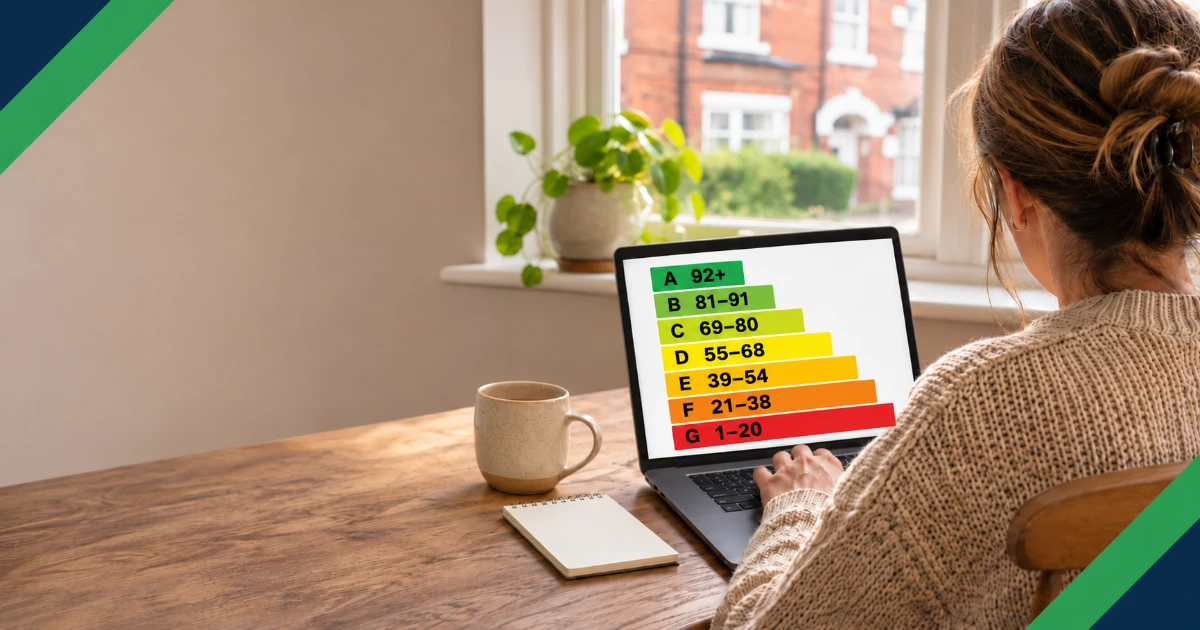
- An EPC rates a property from A (best) to G (worst), where A is 92 plus and G is 1 to 20 in England and Wales, says the ONS.
- An EPC is valid for 10 years, and the GOV.UK service shows the valid until date, says GOV.UK.
- Anyone can search for an EPC. The Scottish register searches by postcode or the 20 digit report reference number.
- If there is no EPC or it has expired, you need a new one from an accredited assessor.
- The minimum EPC for landlords is E, rising to EPC C from 1 October 2030, says GOV.UK.
What does EPC mean?
EPC stands for energy performance certificate, a certificate that rates how energy efficient a property is. An accredited energy assessor produces it after visiting the property to carry out an assessment, and nidirect says only an accredited assessor can produce one. In England and Wales, GOV.UK’s guidance for dwellings says only an accredited domestic energy assessor may carry out the assessment and produce an EPC. The GOV.UK service covers certificates for homes, business properties and public buildings.
The certificate contains information on potential energy costs and carbon dioxide emissions. nidirect says EPCs are produced using standard information about buildings. This lets buyers and tenants compare the energy efficiency of the properties they are considering, and see how much it may cost to heat and light a building before they enter into a contract.
What is the EPC register?
The EPC register is the central database where EPCs are lodged. The GOV.UK find an energy certificate service, the official government EPC checker, searches the register for a single property in England, Wales or Northern Ireland.
For England and Wales, GOV.UK statistics notes say certificates are lodged on the Energy Performance of Buildings Certificates Register, which does not hold every building, because a building only needs an EPC when it is built, sold or let. The same notes say data are kept on the register for 20 years, so one building can have several EPCs. Scotland keeps its own, the Scottish EPC Register, which only lets you view the current valid document for a building.
The GOV.UK data service says its data covers England and Wales and includes certificates registered since 2008, which may have expired or been replaced, so the register holds old certificates as well as current ones.
How do I check my EPC rating?
Search for the property on the GOV.UK find an energy certificate service, then open its certificate to see the rating. GOV.UK says you can use the service to find an existing energy performance certificate (EPC). For a property in Scotland the steps are the same on the Scottish EPC Register, using the postcode or the report reference number. The GOV.UK service also finds display energy certificates for public buildings and air conditioning inspection certificates and reports.
- Open the find an energy certificate service on GOV.UK and select Start now.
- Choose a domestic property, which the service describes as a house or flat, or a non-domestic property for a commercial, industrial or public building.
- Enter the postcode, or search by street name and town, or by certificate number.
- Choose the property’s address from the list, which shows each address with its energy rating and the date its EPC is valid until.
- Open the certificate to see the rating, then print it if you need a copy.
What do EPC ratings from A to G mean?
EPC ratings from A to G, also called EPC bands, are score bands: A at 92 plus is the most efficient and G at 1 to 20 is the least efficient. The certificate shows the band as the energy rating. The Office for National Statistics gives these score ranges for domestic EPCs in England and Wales, where scores typically run from 1 to 100. nidirect adds that A is coloured green on the chart and G is coloured red, and that a higher rating is likely to mean lower fuel bills.
| Band | Score | Position |
|---|---|---|
| A | 92 plus | Most efficient |
| B | 81 to 91 | |
| C | 69 to 80 | |
| D | 55 to 68 | |
| E | 39 to 54 | |
| F | 21 to 38 | |
| G | 1 to 20 | Least efficient |
The same ONS release says homes in England had a median EPC score of 69 (band C) and homes in Wales 68 (band D), for records in the 10 years up to March 2025. Our guide on how EPC ratings are calculated explains how the score is worked out.
What information does an EPC show?
An EPC shows the property’s energy rating and score, a breakdown of its energy performance, and steps you could take to save energy. The certificate on the GOV.UK service is split into sections:
- Energy rating and score: the current and the potential rating, from A to G.
- Breakdown of energy performance: features such as walls, windows, heating, hot water and lighting, each rated from very good to very poor.
- How this affects your energy bills: the estimated yearly cost of heating, hot water and lighting.
- Impact on the environment: the effect of the property on emissions.
- Steps you could take to save energy: the improvements the assessor suggests.
- Rules on letting this property: the lowest rating a property can be let with.
- Other certificates for this property: any other certificates held for it.
How does an EPC show what could be improved?
An EPC shows how efficient the property could be after improvements, and a report with it lists the cost effective measures to get there. nidirect says the report is for homeowners and businesses, and gives replacing lighting with low energy bulbs and upgrading insulation as examples of improvements the certificate can point to. The measures in the report also matter to landlords, because the GOV.UK landlord guidance defines relevant energy efficiency improvements as measures recommended in the EPC report.
What is the difference between the current and potential rating?
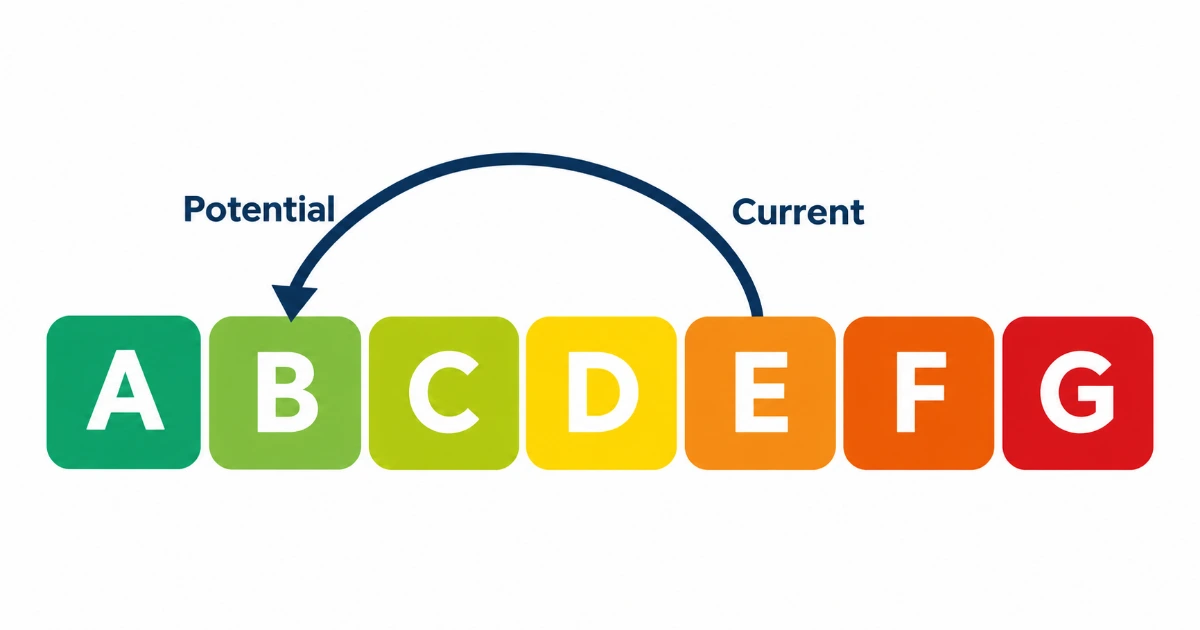
The current rating shows how efficient the property is now, and the potential rating shows what it could reach if the suggested improvements are completed. The certificate on the GOV.UK service shows both as a rating and a score on the same chart, and a section called Steps you could take to save energy lists the improvements.
Can I do an EPC check by postcode, address or certificate number?
Yes, you can find an energy performance certificate by postcode, address or certificate number, and you only need one of them. The GOV.UK service works as an EPC checker by postcode, and it also accepts a street name and town or a certificate number. The Scottish EPC Register accepts a postcode or a report reference number. To find an EPC by address on GOV.UK, enter the street name and town, not the full address.
| Search method | What to enter | Where it works |
|---|---|---|
| Postcode | The property’s postcode | GOV.UK and the Scottish EPC Register |
| Street name and town | Both, as they appear in the address | GOV.UK |
| Certificate number | The number on the certificate | GOV.UK |
| Report reference number (RRN) | The 20 digit number at the top right of a Scottish EPC, in five groups of four digits separated by dashes | Scottish EPC Register |
How do I choose the right EPC from the search results?
Choose the address that matches the property exactly, including the flat number, because the list shows every property at the postcode that has an EPC. The GOV.UK service lists each address with its energy rating and the date its EPC is valid until, so a block of flats appears as one row for each flat.
If a property has more than one certificate, the certificate page has a section called Other certificates for this property. Use the most recent one, because GOV.UK’s guidance for dwellings says only the most recent EPC for each distinct building or building unit is valid. The certificate page also shows the current and potential rating and the report reference number, which you can use to confirm you have the right certificate.
Where do I check an EPC in England, Wales, Scotland and Northern Ireland?
Use GOV.UK to check EPC ratings for a property in England, Wales or Northern Ireland, and the Scottish EPC Register for a property in Scotland. The UK has no single EPC register, so the nation where the property is decides which one to use, not where you live.
| Nation | Where to check | Source |
|---|---|---|
| England | The find an energy certificate service on GOV.UK | GOV.UK |
| Wales | The same GOV.UK service, which is also available in Welsh (Cymraeg) | GOV.UK |
| Northern Ireland | The same GOV.UK service. nidirect also points to the Northern Ireland EPC registers | GOV.UK and nidirect |
| Scotland | The Scottish EPC Register, by report reference number or postcode. The Scottish Government has further information on EPCs | Scottish EPC Register |
How long is an EPC valid for?
An EPC is valid for 10 years, according to GOV.UK. The certificate and the search results show the date it is valid until, and the rules on expiry and renewal are in how long an EPC lasts.
How do I check the EPC expiry date?
Search for the property on the GOV.UK service and read the Valid until date beside its address. This is the EPC expiry date, and the certificate shows it too. An EPC that has passed its date is marked Expired in the list, and one that a newer certificate has replaced shows the warning “A new certificate has replaced this one” instead. If the search shows no result at all, the property may have no EPC, which the section on what to do if you cannot find an EPC covers.
Can I reuse an EPC when I sell or rent a property?
Yes, a valid EPC can be used more than once during its 10 years, according to nidirect. A buyer who is given a copy can reuse it if they sell or rent the building within that period. If you are the seller, whether you need an EPC to sell a house explains when it must be given to buyers.
What if I cannot find an EPC?
If you cannot find an EPC, the property may have none, its EPC may have expired, or in Scotland it may not be on the register. GOV.UK says you can get a new energy certificate if a property has none or it has expired, and that you can contact the Ministry of Housing, Communities and Local Government (MHCLG) for help finding an energy certificate. Some properties do not need an EPC at all, which our guide on when an EPC is not required explains.
| Situation | What to do | Source |
|---|---|---|
| No result in England, Wales or Northern Ireland | Search again by street name and town or by certificate number, because the service only lists properties with an EPC. If there is still none, get a new energy certificate | GOV.UK |
| No result in Scotland | Not all EPCs are on the register, because central lodgement was phased in. It holds EPCs for dwellings sold or rented to a new tenant after 1 December 2008 and for new buildings with a building warrant application made after 9 January 2013. The site also lists a Missing Address Form | Scottish EPC Register |
| Buying or renting in Northern Ireland and not given an EPC | Contact your local district council building control | nidirect |
What if the EPC details look wrong?
If the details on an EPC look wrong, contact the energy assessor who produced it first, then the assessor’s accreditation scheme if the matter is not resolved. GOV.UK’s guidance for dwellings, which applies to England and Wales, says contact details for both are on the EPC. The scheme must investigate, and where the information is incorrect a new EPC must be issued and the register amended, at no cost to you.
A registered EPC cannot be altered, so a correction arrives as a new certificate. If a property listing shows a different rating from the register, note that an advert must state the rating shown on the EPC, and Trading Standards enforce most EPC duties. We found no official page on what to do when a listing and the register differ, so check the register first.
Who can check an EPC?
Anyone can search for an EPC, because EPCs are held on public registers. nidirect says a copy of each EPC is lodged on a national register that is publicly available. GOV.UK lets you find a certificate for a property in England, Wales or Northern Ireland. In Scotland, the Scottish EPC Register says an EPC contains information about the building only, with no details of the owner or tenant recorded or published. Its search is for individuals, so automated software is prohibited. Access is restricted for buildings whose owners used the opt-out, until the EPC is updated or replaced.
How do I get a copy of my EPC?
To get a copy of your EPC, download or print the certificate from the find an energy certificate service on GOV.UK. For a property in Scotland, retrieve it from the Scottish EPC Register instead. GOV.UK says you can download it for free, and that after a new assessment the assessor gives you a digital copy. The same steps work if you have lost your copy. GOV.UK also says the seller, the landlord or the letting agent must show you the EPC if you are buying or renting.
In Scotland, the energy report in the Home Report is the EPC. mygov.scot says a seller or selling agent must give you the Home Report within nine days of you asking, and GOV.UK says an EPC in Scotland must be displayed somewhere in the property, for example in the meter cupboard or next to the boiler.
When should I check an EPC rating?
Check an EPC rating when you buy, sell or rent a property. Sellers and landlords can check first whether a valid EPC already exists, because GOV.UK says you must order an EPC for potential buyers and tenants before you market a property to sell or rent, and that you may need a new one if the property does not appear in the service. Buyers and tenants can check the rating to see how efficient the property is before they commit.
GOV.UK says a property that is being sold or rented needs a valid EPC. nidirect says one is needed whenever a property is built or marketed for sale or rent. In Northern Ireland, nidirect says a buyer or new tenant should be given the EPC at no cost, and a seller must give a copy to the new owner.
If you are not sure why a property needs one, our guide to why you need an EPC explains it.
What is the minimum EPC for landlords?
The minimum EPC for landlords is rating E. Landlords in England and Wales cannot let a property covered by the MEES Regulations with an EPC rating below E, unless they have a valid exemption. GOV.UK says this has applied since 1 April 2020 to domestic private rented properties that are let on specific types of tenancy and are legally required to have an EPC. Local authorities enforce the rule, and the GOV.UK guidance applies to England and Wales only.
The EPC requirements for landlords are due to rise. GOV.UK says the government confirmed on 21 January 2026 that the standard will increase to EPC C from 1 October 2030, and the government response says the existing standard of E continues until then.
Is the EPC rating system changing?
No, the EPC rating system has not changed yet. GOV.UK says the launch of reformed EPCs has moved to the second half of 2027, so the A to G rating on current certificates still applies. The same page says a new launch date and implementation plan will be agreed with industry and the devolved administrations. In Scotland, the Scottish Government says the Energy Performance of Buildings (Scotland) Regulations 2025 will bring new-style certificates with more detailed ratings. Check both pages for the latest date before you rely on this.
How can I arrange an EPC?
To arrange an EPC, send Checks Sorted one enquiry. We match it with a participating independent professional covering your area, where we can, but we do not visit or assess properties ourselves. There are four steps:
- State what you need
Select the property safety service you require. - Say where the property is
Enter its postcode and any relevant details. - Get your match
Checks Sorted picks an appropriate participating professional for the service and location. - Discuss the job
The professional gets in touch about availability, price and the work required.
FAQs about how to check EPC rating
What is my EPC rating?
Your EPC rating is the letter shown as the Energy rating at the top of your certificate, next to the Valid until date and the certificate number. To find it, search for your address on the GOV.UK find an energy certificate service and open the certificate. If nothing appears, the property may not have an EPC, which the section on what to do if you cannot find an EPC explains.
Can I check an EPC certificate online for free?
Yes, GOV.UK says you can use the find an energy certificate service to check whether a property has a valid EPC and download it for free. The service covers England, Wales and Northern Ireland, and for Scotland the Scottish EPC Register has its own online search.
What is the lowest EPC rating?
The lowest EPC rating is G, the least efficient band, which covers scores of 1 to 20 in England and Wales, according to the Office for National Statistics. Ratings F and G are both below the minimum EPC E that GOV.UK sets for landlords in England and Wales.
Can I get an EPC certificate online?
You can get an existing EPC certificate online, but a new one needs an assessment. GOV.UK says you can download an existing EPC for free from the find an energy certificate service. For a new certificate, GOV.UK says you arrange a property assessment, find an accredited assessor online, and the assessor gives you a digital copy after the assessment.
How do I get a new EPC?
To get a new EPC, arrange a property assessment with an accredited assessor. GOV.UK says you can find one on its find an accredited assessor service in England, Wales or Northern Ireland. Contact the assessor directly to arrange a viewing, and check that they are part of an accredited scheme. Scotland has a different process, and the Scottish EPC Register has a search for EPC assessors.
What does an EPC assessment involve?
An accredited energy assessor visits the property to carry out the assessment, according to nidirect. The certificate on the GOV.UK service rates features such as walls, windows, heating, hot water and lighting, and uses an assumed rating based on the property’s age and type for features the assessor could not inspect.
How much does an EPC cost?
There is no fixed price for an EPC. GOV.UK says the cost of an assessment varies by assessor and the size of the property, so give each assessor the size of the property and compare their quotes. A buyer or tenant does not pay for the EPC: in England and Wales the person selling or renting out the property must make a valid EPC available to prospective buyers and tenants free of charge, under regulation 6 of the 2012 regulations.
What is an EPC check?
An EPC check, also called an EPC register check, is a search of the EPC register to see whether a property has a valid EPC and what its rating is. GOV.UK says you can use the find an energy certificate service to check for a valid EPC, so it works as a free EPC rating checker for England, Wales and Northern Ireland, and you can search by postcode.
What happens if a property has no EPC?
A property with no valid EPC when you market, sell or rent it can lead to a penalty charge notice. In England and Wales the penalty is £200 for a dwelling, under regulation 38 of the Energy Performance of Buildings (England and Wales) Regulations 2012, and between £500 and £5,000 for a building that is not a dwelling. In Northern Ireland, nidirect says not having an EPC could lead to enforcement action and a penalty charge notice, and district councils enforce it.
Sources
- GOV.UK: Find an energy certificate
- GOV.UK: Get a new energy certificate
- GOV.UK: Selling a home, energy performance certificates
- GOV.UK: Domestic private rented property, minimum energy efficiency standard, landlord guidance
- GOV.UK: Domestic private rental sector minimum energy efficiency standards enforcement
- GOV.UK: Improving the energy performance of privately rented homes, government response
- GOV.UK: Energy Performance of Buildings Certificates in England and Wales, technical notes
- GOV.UK: Energy Performance Certificates for the marketing, sale and let of dwellings
- mygov.scot: Home Report
- legislation.gov.uk: The Energy Performance of Buildings (England and Wales) Regulations 2012, regulations 6 and 38
- GOV.UK: Reforms to the Energy Performance of Buildings regime
- Scottish EPC Register
- nidirect: Energy Performance Certificates
- Office for National Statistics: Energy efficiency of housing in England and Wales