
Fire Risk Assessment

Fire Risk Assessment Near Me: Get a Quote

Arranging a fire risk assessment is a legal duty for the responsible person , meaning whoever controls the building. If you need a fire risk assessment near you, tell us what kind of building it is and where it is, and ChecksSorted passes your enquiry to participating independent professionals who cover your area.

It is not for a single owner-occupied home. ChecksSorted does not carry out the assessments itself.

Request a quote
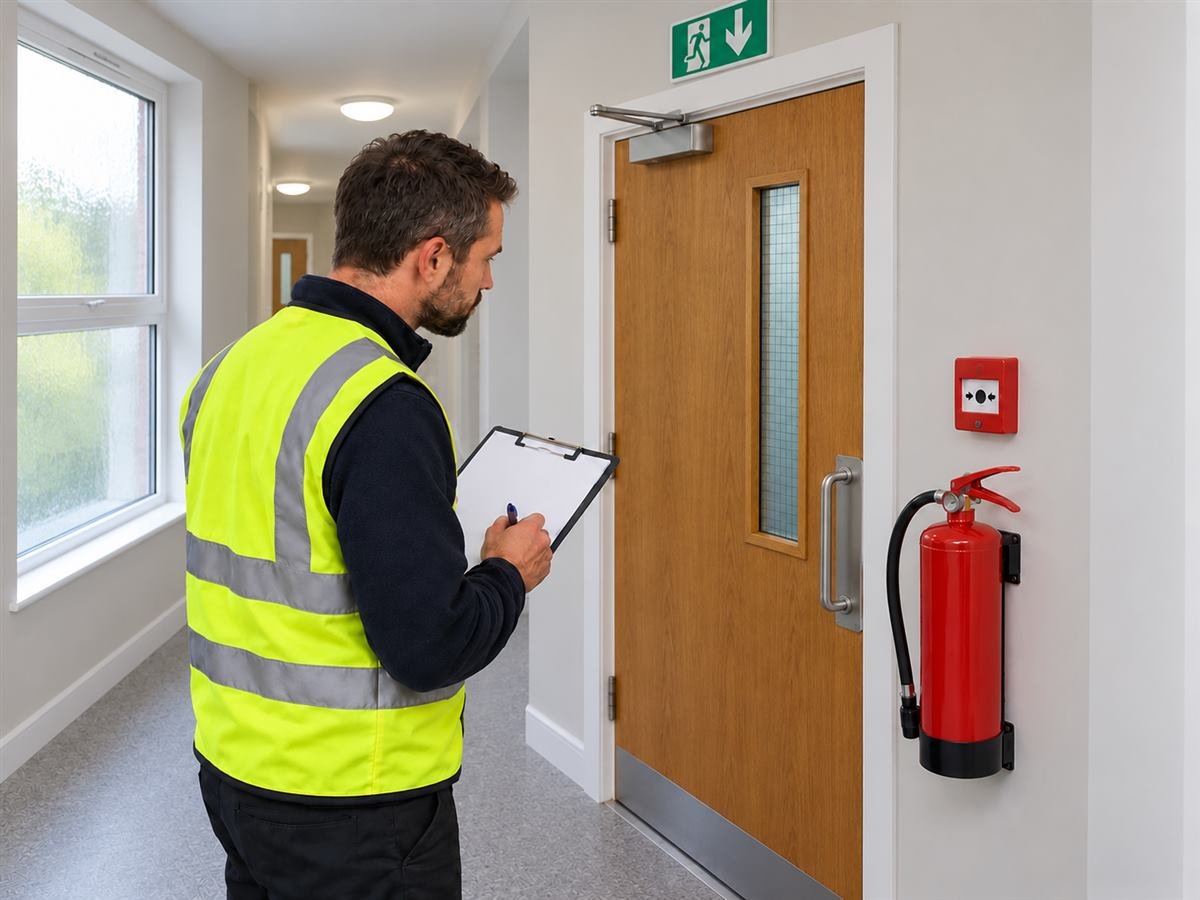
Fire risk assessment of a building

What is a fire risk assessment?

A fire risk assessment is a review of a building. According to the Leasehold Advisory Service , it looks at how likely a fire is to start, what would happen if one did, how to reduce the risk and what precautions keep people safe. The responsible person carries it out, reviews it regularly and keeps a written record.

The assessment follows five steps:

  1. Identify the fire hazards.
  2. Identify people at risk.
  3. Evaluate, remove or reduce the risks.
  4. Record your findings, prepare an emergency plan and provide training.
  5. Review and update the fire risk assessment regularly.

Source: GOV.UK . Our guide What is a fire risk assessment? goes into more detail.
Who is responsible for making a fire risk assessment?

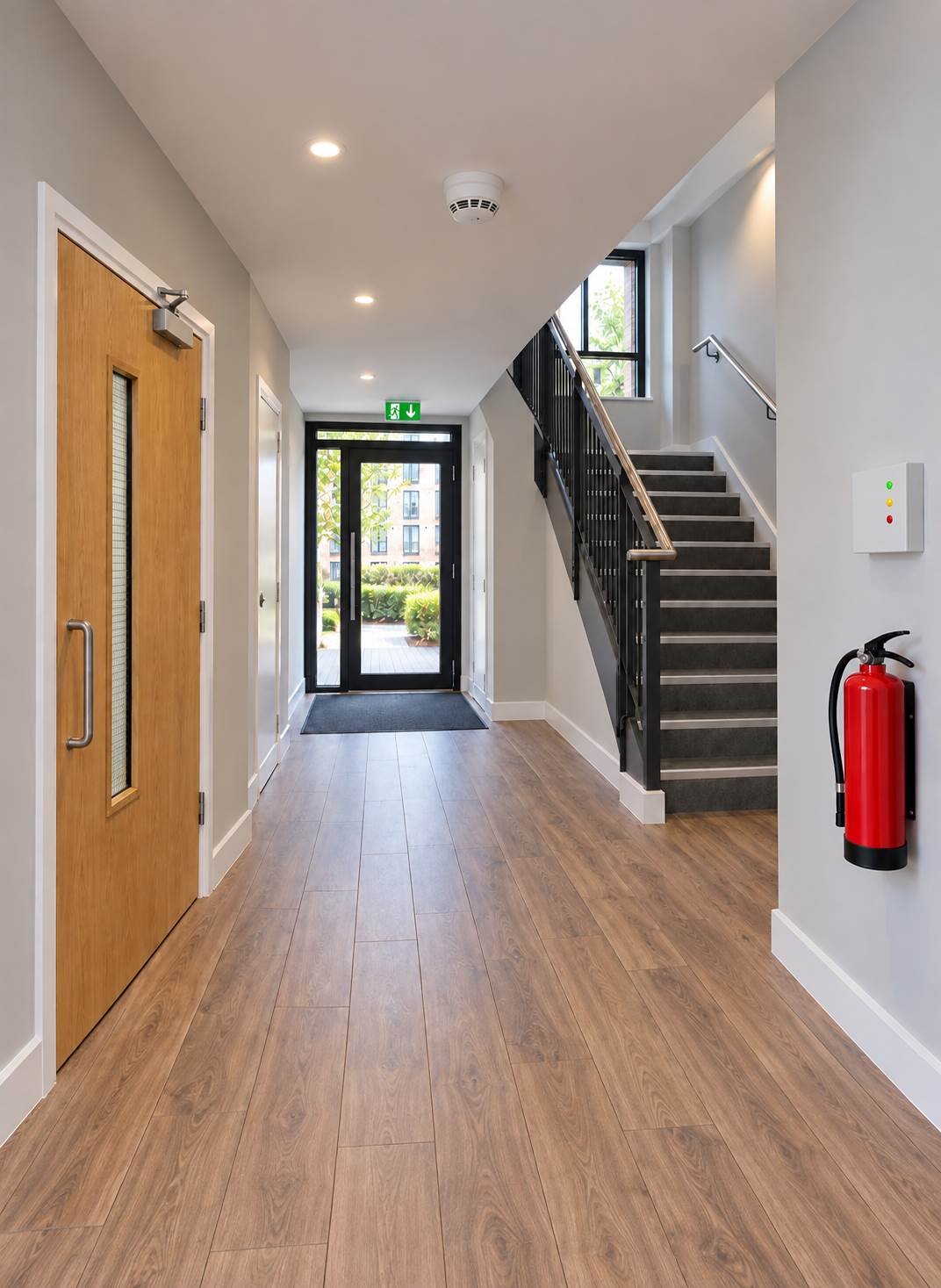
The responsible person for a fire risk assessment is whoever has control of the premises. GOV.UK says that includes employers, owners, landlords, occupiers and facilities or building managers, and that if there is more than one, they have to work together. For the shared areas of a block of flats, the responsible person is the landlord, freeholder or managing agent. Article 3 of the Order gives the full definition. Our guide Who is responsible for a fire risk assessment? has more.

What does a fire risk assessment do?

A fire risk assessment looks at eight things, according to GOV.UK :

  • emergency routes and exits
  • fire detection and warning systems
  • fire fighting equipment
  • the removal or safe storage of dangerous substances
  • an emergency fire evacuation plan
  • the needs of vulnerable people
  • information to employees and other people on the premises
  • staff fire safety training

For a block of flats, the Leasehold Advisory Service says the assessment covers the shared areas.

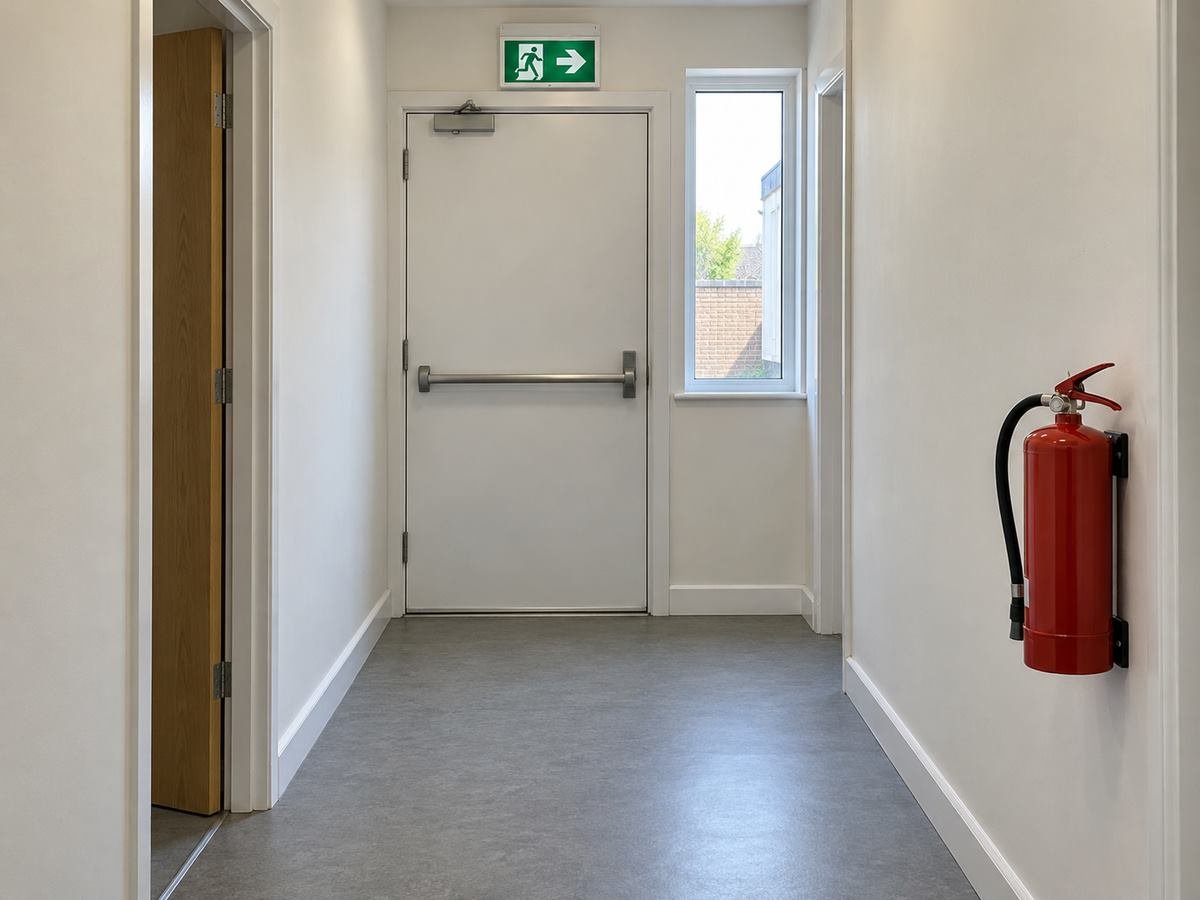
Back corridor of a small UK office or shop with a fire exit door, a green running man exit sign and a fire extinguisher on the wall.

Fire risk assessment requirements: which buildings need one?

Fire risk assessment duties cover business premises and the shared parts of any building with more than one home. The table shows the main cases.

Premises What the rules say
Blocks of flats The shared areas need an assessment. The responsible person is the landlord, freeholder or managing agent.
Houses in multiple occupation (HMOs) The shared parts of a multi-occupied residential building are covered. Some councils also ask for the assessment with an HMO licence application.
Workplaces and commercial premises Covered, as a commercial or workplace fire risk assessment. The responsible person is usually the employer or the person in control of the premises, and in some cases the owner.
Premises the public can enter Covered.
Bed and breakfasts, guesthouses and self-catering lets Covered. The Order also applies if you have paying guests.
A single private home Not covered. The Order does not apply to domestic premises.

Sources: GOV.UK , article 3 and article 6 of the Regulatory Reform (Fire Safety) Order 2005.

An HMO fire risk assessment can also be a licence matter. Windsor and Maidenhead lists a copy of the assessment among the documents required, a Hillingdon's application form lists one too. Reading's guidance does not mention it, so check your own council.

Our guides cover each case: who needs a fire risk assessment, HMOs and commercial properties.

When is a fire risk assessment required for flats?

A fire risk assessment is required for every block of flats, covering its shared areas. The Leasehold Advisory Service says all buildings in England and Wales containing flats must have one, and GOV.UK says the responsible person for the shared areas is the landlord, freeholder or managing agent.

The GOV.UK guide to fire safety in purpose-built blocks of flats (published in 2011) describes four types of assessment, sometimes called levels:

  • Type 1: common parts only, without opening up the structure
  • Type 2: common parts only, with some opening up of construction on a sampling basis
  • Type 3: common parts and a sample of flats, without opening up the structure
  • Type 4: common parts and flats, with some opening up of the structure on a sampling basis

The guide says a Type 1 assessment is the basic one needed to satisfy the Regulatory Reform (Fire Safety) Order 2005 and will normally be sufficient for most purpose-built blocks of flats. It says Type 2 and Type 4 are only for limited circumstances, such as a reason to suspect serious structural problems, and that Type 3 is not possible for long leasehold flats because freeholders normally have no right of access.

A fire risk assessment for communal areas is not the same as a Fire Risk Appraisal of External Walls (FRAEW).

GOV.UK has a separate guide for small blocks of flats in England, up to a ground, first and second floor with no more than six flats. For more on flats, see our guide Fire risk assessment for flats and communal areas.

How often should a fire risk assessment be carried out?

The law sets no fixed interval for reviewing the assessment. The responsible person has to review the assessment regularly to keep it up to date, and review it again sooner if there is reason to suspect it is no longer valid. Reasons to review it include:

  • a fire in the shared parts of the building
  • major building works
  • more people using the building

The assessment itself might also recommend how often to review it. Sources: article 9 of the Order and the Leasehold Advisory Service .

Our guide How often should a fire risk assessment be done? has more. (add when this page is live)

Who can carry out a fire risk assessment?

You can do the assessment yourself or appoint a competent person:

  • Do it yourself, with the help of standard fire safety risk assessment guides, if you have the expertise and the time.
  • Appoint a competent person, such as a professional risk assessor, if you do not.

The fire and rescue service cannot carry it out for you (GOV.UK). The NFCC says you should be satisfied that the assessor is competent, which they can show with evidence that they meet the criteria of the Fire Risk Assessment Competency Council. You keep responsibility for the assessment even when you use a contractor. If you are looking for a fire risk assessment company or assessor through us, ask whoever contacts you what evidence of competence they hold. See also Who can carry out a fire risk assessment?

What are the penalties for having no fire risk assessment?

You could be fined or go to prison if you do not follow fire safety regulations, which include the duty to carry out an assessment. The GOV.UK enforcement page sets out what can follow:

  • minor penalties can be up to £5,000
  • major penalties can mean unlimited fines and up to 2 years in prison
  • fire and rescue authorities can issue notices, including a prohibition notice that takes effect immediately where the risk is so great that access must be prohibited or restricted
  • you can appeal to the magistrates' court within 21 days of receiving a notice
How much does a fire risk assessment cost?

The cost depends on the building, and ChecksSorted does not set prices, so this page gives no figure. Each participating independent professional gives their own quote, and they can quote more easily if you tell them:

  • the type of building
  • how many floors, flats or units it has
  • who uses it
  • for a block of flats, which type of assessment you want (Type 1 to Type 4), because the amount of work differs

Ask what the quote covers, and whether it includes the written record, before you agree to it. Related guide: How much does a fire risk assessment cost?

Which safety checks does a landlord need alongside a fire risk assessment?

Alongside a fire risk assessment, a landlord needs a gas safety check every year for the gas appliances they provide and, for each rented home in England, an electrical inspection at least every 5 years. A landlord fire risk assessment covers the shared areas of flats and HMOs, so the three checks have different timings:

Check How often
Fire risk assessment (shared areas of flats, HMOs and business premises) Reviewed regularly, with no fixed interval
Gas safety check (gas appliances the landlord provides) Every year
Electrical inspection (EICR) for each rented home in England At least every 5 years

Each service needs its own enquiry, so send one for each and say they are for the same building. See our gas safety certificate and EICR pages, or all of our property safety services.

How to get a fire risk assessment quote

You get a fire risk assessment quote by sending one enquiry through ChecksSorted, in four steps:

01

Tell us what you need

Choose the property safety service required.

02

Tell us where

Enter the property postcode and relevant details.

03

We match your enquiry

ChecksSorted identifies an appropriate participating professional covering the service and location.

04

Discuss the job

The professional contacts you about availability, price and the work required.

Fire risk assessment near me: where we are starting

We are starting in five towns and adding more areas as the network of participating professionals grows. Availability depends on the service required, the property location and the participating professionals.

Frequently asked questions

Where can I get a fire risk assessment near me?

Fill in the enquiry form with the building postcode and whether it is a block of flats, an HMO or business premises. ChecksSorted passes it on, and a participating independent professional covering your area then contacts you.

Is a fire risk assessment a legal requirement?

Yes, for business premises and for the shared areas of multi-occupied residential buildings. The main fire risk assessment requirements are in article 9 of the Regulatory Reform (Fire Safety) Order 2005. It says the responsible person must make a suitable and sufficient assessment of the risks. GOV.UK says you must carry it out and review it regularly. The Order does not cover the inside of a single private home.

Can I do my own fire risk assessment?

Yes, if you have the expertise and the time. GOV.UK says you can do it yourself with standard fire safety risk assessment guides, and that if you cannot, you need to appoint a competent person. The NFCC adds that you keep responsibility for the assessment even when you use a contractor.

Do I have to keep a written record of the fire risk assessment?

Yes. GOV.UK says you must keep a written record of your assessment. The Order says to make the record as soon as practicable after the assessment is made or reviewed, and it must include any group of people identified as especially at risk.

Does an HMO need a fire risk assessment?

Yes, for its shared parts. The shared parts of a house in multiple occupation are covered by the same duty as other multi-occupied residential buildings, according to GOV.UK. Some councils also ask for a copy with a licence application: Winchester and Maidenhead and High Wycombe list it, and Reading's guidance does not mention it.

Does a fire risk assessment cover the inside of my flat?

Usually not. For a block of flats the assessment covers the shared areas. The GOV.UK guide says only Types 3 and 4 look inside flats, on a sample basis, and that Type 3 is not possible for long leasehold flats. The Order covers the common parts and the doors between each home and the common parts, but it does not apply to domestic premises such as the inside of your own flat (article 6).

What is a fire emergency plan?

A fire emergency plan sets out how people get out of the building safely if there is a fire. GOV.UK says the plan must show how you have clear, marked escape routes that are as short and direct as possible, enough exits, emergency doors that open easily, emergency lighting where needed, employee training and a safe meeting point for staff. You should also make special arrangements for people with mobility needs. Preparing an emergency plan is one of the five steps of a fire risk assessment.

Send your fire risk assessment enquiry

Tell us what you need and where the building is.

Request a quote