
Get an EPC Certificate Quote Near You for a Sale or Let
Most properties that are sold or let need an Energy Performance Certificate (EPC), and GOV.UK says you must order it from an accredited assessor before you market the property. If you need an EPC certificate near you, tell us the postcode and whether the property is a home or business premises. Your enquiry then goes to participating independent professionals who cover that area.
You can send an enquiry if you are:
- Selling or letting a home
- Selling or letting an office, shop or other business premises
Already have a certificate? The GOV.UK Find an energy certificate service lets you search for an existing certificate by postcode, street name and town, or certificate number. If you need a new one, send us a quote request.
Checkssorted does not carry out the assessments itself, but matches your enquiry with a participating independent professional.
Request a quote →What is an EPC certificate?
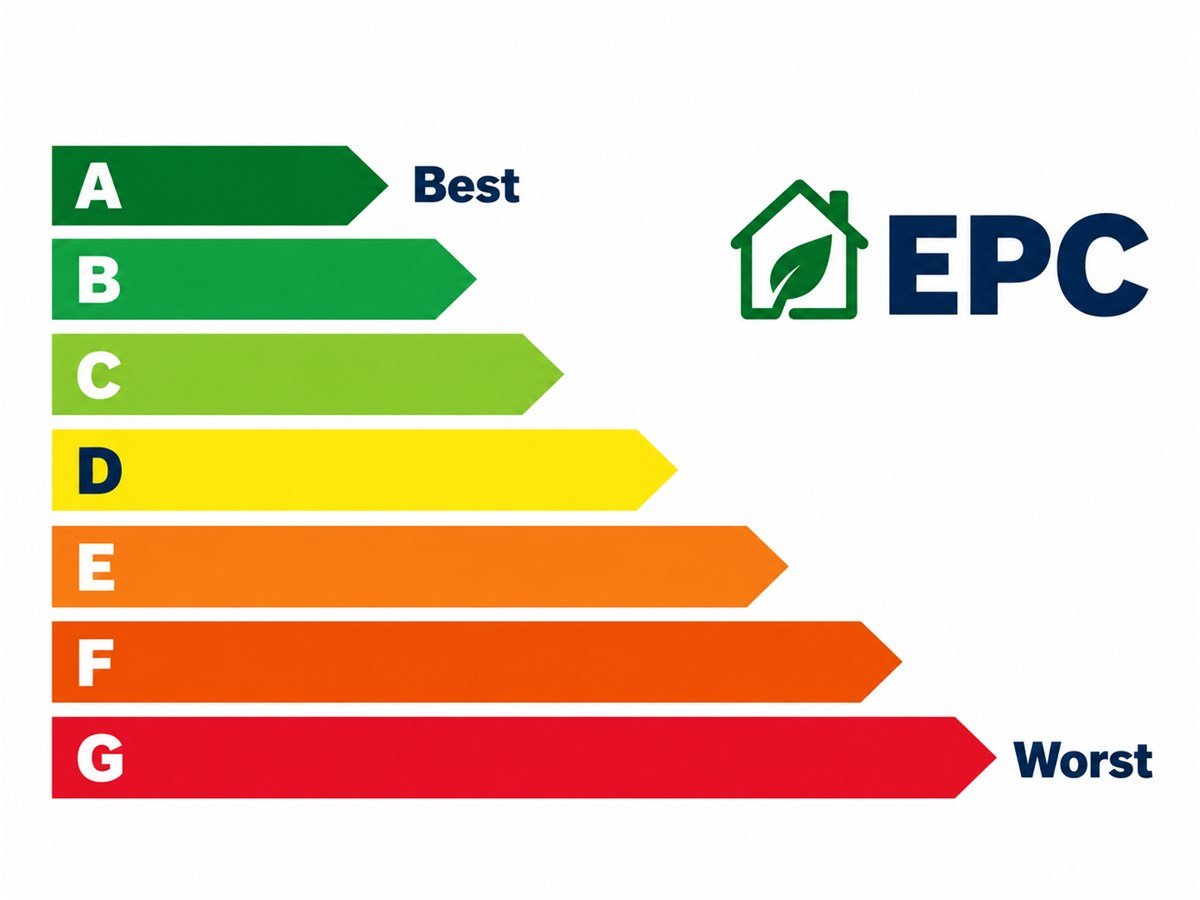
An EPC certificate, or Energy Performance Certificate, tells you how energy efficient a property is. According to GOV.UK, it gives the property a rating from A (best) to G (worst).
It also provides information about the property's energy use, typical energy costs, and recommendations to improve energy efficiency and save money.
EICR for commercial property
An EICR is not a single legal requirement for every commercial property. Under the Electricity at Work Regulations 1989, employers and self-employed people must comply for the electrical systems they control. Those systems must be maintained, so far as is reasonably practicable, to prevent danger.
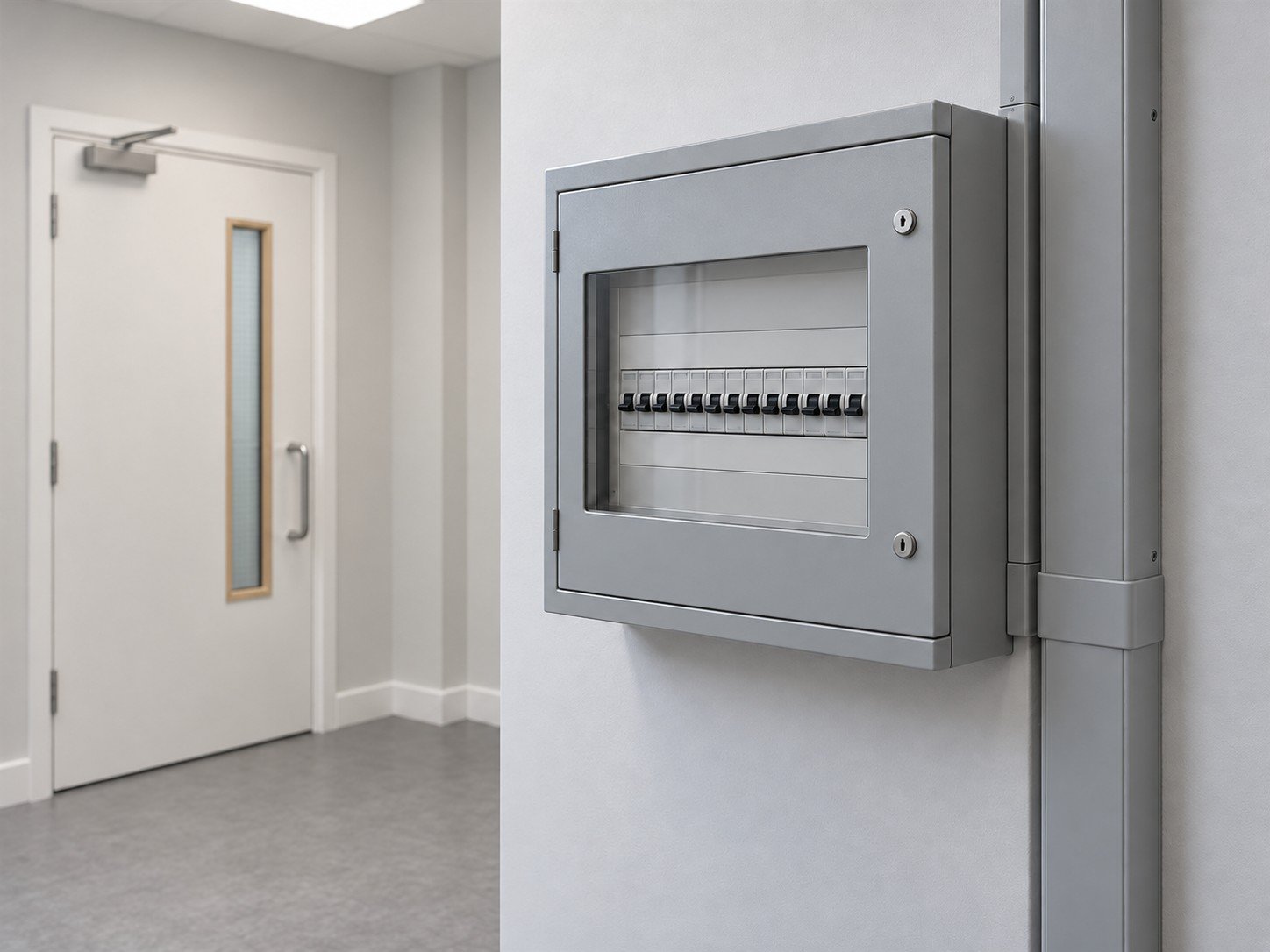
HSE says the type and frequency of checks, inspections and testing depend on the equipment, the environment and the results of previous checks. Electrical Safety First recommends inspection and testing of a business's electrical installation at least every 5 years. Check your lease and your insurance policy for any extra requirement for a current commercial EICR certificate.
If you need to book a commercial EICR for an office, shop or other premises, tell us the type of property and roughly how many circuits it has, and we will pass the enquiry on. The HSE guidance on electrical safety explains the duties in more detail. Our guide covers the commercial question too: Do you need an EICR for a commercial property?
Request a quoteWhen is an EPC certificate required?
You must have an EPC when you sell a property, rent it out or build a new one, and for business premises when they are sold, rented out or newly built. GOV.UK says you must order it before you market the property. The main cases are below.
| Case | Is one required? |
|---|---|
| Selling a home | Yes. Order it before you market the property. |
| Renting out a home | Yes. Order it before you market the property, and show it to prospective tenants. |
| Building a new home | Yes. |
| Selling or renting out business premises | Yes. A fine of £500 to £5,000 applies if it is not made available to a buyer or tenant. |
| A new commercial building | Yes, when the building is finished. |
| Some buildings | Not for some buildings. See the list of exemptions below. |
Sources: GOV.UK on selling a home, GOV.UK on business premises regulation 6 (a free copy for the buyer or tenant) and regulation 7 (ordering before marketing) of the Energy Performance of Buildings (England and Wales) Regulations 2012. Our guide When is an EPC required? has more.
EPC requirements for landlords
In England and Wales, a landlord cannot let or continue to let a home covered by the regulations with a rating below E unless they have a valid exemption. GOV.UK states this has applied since 1 April 2020.
A landlord is not currently required to spend more than £3,500 including VAT on improvements. If the home still cannot reach E, an exemption can be registered, and some exemptions last 5 years. Local authorities enforce the rules. The government has also said it is exploring how to improve energy performance standards for privately rented homes and will provide further information in due course, so check GOV.UK for the current rules. For more detail, see our guide EPC for landlords.
Commercial EPC requirements
For business premises you must have an EPC if you rent out or sell the premises, or if a building under construction is finished. GOV.UK states you must also display it if the total useful floor area is over 500 square metres, the building is frequently visited by the public and one has already been produced.
From 1 April 2023, privately rented business premises in England and Wales need at least a band E rating, unless a valid exemption is registered (GOV.UK). The type of assessor you need depends on the complexity and features of the building. Our guide Commercial EPCs covers this in full.
Which buildings do not need an EPC certificate?
Temporary buildings, small stand-alone buildings, places of worship, some holiday lets and some listed buildings do not need an EPC. GOV.UK lists these, among others:
- temporary buildings that will be used for less than 2 years
- stand-alone buildings with a total useful floor space of less than 50 square metres
- places of worship
- holiday accommodation that is rented out for less than 4 months a year or is let under a licence to occupy
- listed buildings, if the work to meet minimum energy performance requirements to rent out the property would unacceptably alter its character or appearance
For a listed building, GOV.UK advises you to check with your local authority's conservation officer. Historic England has advice on how the rules apply to listed buildings. Our guide EPC exemptions has more.

Who has to arrange an EPC certificate?
The person selling or letting a property has to arrange its EPC. The regulations say that if no valid certificate is available, one must be commissioned before the property is put on the market (regulation 7). The seller, landlord or letting agent must show you the certificate if you are buying or renting, and the person who ultimately becomes the buyer or tenant must be given a valid one free of charge (regulation 6). GOV.UK adds that your estate agent may be able to help arrange it.
How long does an EPC certificate last?
An EPC certificate is valid for 10 years, according to GOV.UK, and the same applies to business premises. When it expires, or if a property never had one, you need a new one before you get the property ready to sell or rent. Check the expiry date on the certificate before you market the property.
More in our guide How long does an EPC last?
Who can do an EPC certificate?
An EPC has to come from an accredited energy assessor. GOV.UK advises you to contact the assessor directly and check that they are part of an accredited scheme. The regulations say an energy assessor must be a member of an accreditation scheme approved by the Secretary of State (regulation 22).
If an assessor contacts you through us, ask which accreditation scheme they belong to. If you are unhappy with an assessment, GOV.UK advises complaining to the assessor first, then to their accreditation scheme. Our guide Who can carry out an EPC? goes further.
What happens when you get an EPC certificate?
An accredited assessor assesses the property and gives you a digital copy of the certificate afterwards. GOV.UK explains that you contact the assessor directly to arrange a viewing, and you can find one with its find an accredited assessor service in England, Wales or Northern Ireland. If you use CheckssSorted, a participating independent professional contacts you about the work.
What are the penalties for not having an EPC certificate?
You can be fined if you do not get an EPC when you need one. GOV.UK gives no amount for homes, and the official guidance sets out what else can follow:
- for business premises, the fine is between £500 and £5,000 based on the rateable value if you do not make one available to a prospective buyer or tenant
- you can ask for a review of a penalty notice and then appeal to the county court within 28 days of receiving a confirmed penalty
- for a rented home below band E, a local authority can fine up to £5,000 per property in total, with up to £2,000 for a letting of less than 3 months and up to £4,000 for 3 months or more
Sources: GOV.UK on business premises for the business fine and the appeal, and GOV.UK landlord guidance for the penalties on rented homes.

How much does an EPC certificate cost?
The cost of an EPC varies by assessor and the size of the property, according to GOV.UK. Each participating professional prices their own services, and CheckssSorted does not set prices, so no figure appears here.
When you send your enquiry to get a quote, it helps to have these details to hand:
- whether the property is a home or business premises
- its size, such as the number of bedrooms or the floor area
- whether it is being sold or let
- whether it already has a certificate
Compare what each quote includes before you choose. Related guide: How much does an EPC cost?
What else does a landlord need to arrange besides an EPC?
Besides an Energy Performance Certificate, a landlord usually needs a gas safety check every year for any gas appliances they provide and, for each rented home in England, an electrical inspection at least every 5 years. The table shows how the three compare.
| Check | How often |
|---|---|
| EPC (rented homes and business premises) | Valid for 10 years |
| Gas safety check (gas appliances the landlord provides) | Every year |
| Electrical inspection (EICR) for each rented home in England | At least every 5 years |
Sources: GOV.UK on selling a home (valid for 10 years), HSE on gas safety checks (an annual check) and GOV.UK on electrical safety (an inspection at least every 5 years).
Send a separate enquiry for each check and mention that they are for the same property. Our gas safety certificate and EICR pages cover the other two, and all of our property safety services are listed together.
How to get an EPC certificate quote
You get a certificate quote by sending one enquiry through ChecksSorted, in four steps:
- Tell us what you need Choose the property safety service required.
- Tell us where Enter the property postcode and relevant details.
- We match your enquiry ChecksSorted identifies an appropriate participating professional covering the service and location.
- Discuss the job The professional contacts you about availability, price and the work required.
EPC near me: our first five towns
ChecksSorted is launching with five towns, and more areas will follow as more participating professionals join. Whether we can match your enquiry depends on where the property is and which professionals are available for the job. This page covers England and Wales.
Looking for an assessor near you? Enter the postcode in the quote form, and we will match your enquiry where we can.
Frequently asked questions
Where can I get an EPC certificate near me?
Fill in the enquiry form with the property postcode and whether it is a home or business premises. ChecksSorted passes it on, and a participating independent professional covering your area then contacts you about availability, price and the work required.
Is an EPC a legal requirement?
Yes, when you sell, rent out or build a property, and for business premises when they are sold, rented out or newly built. GOV.UK states you must have one when you are selling, renting out or building a property. Some buildings are exempt, such as places of worship and certain listed buildings.
Can I sell my house without an EPC?
No, you must have an EPC to sell a property and must order one before you market it, according to GOV.UK. You can be fined if you do not get one when you need one. A few buildings are exempt, so check the list above.
Can any electrician do an EPC?
No, not unless they are an accredited energy assessor. The regulations say an energy assessor must be a member of an accreditation scheme approved by the Secretary of State, and GOV.UK advises you to check that an assessor is part of an accredited scheme before you use them.
Can I get a free EPC certificate?
Only an existing EPC is free. GOV.UK says you can download it for free using its find an energy certificate service. A new one is paid for: if the property has no valid certificate, GOV.UK notes you will need to pay an accredited assessor. The person who becomes the buyer or tenant must be given a valid certificate free of charge.
How quickly can I get an EPC certificate?
GOV.UK gives no standard time for an assessment, because it depends on the assessor and the property. The rules say it must be commissioned before the property is marketed and obtained within 7 days of marketing, or within a further 21 days if all reasonable efforts to get it in 7 days have failed (regulation 7).
Can I book an EPC through ChecksSorted?
No. You request a quote, and ChecksSorted passes your enquiry to a participating independent professional covering your area. The professional contacts you about availability, price and the work required, so any booking is arranged with them.
How do I check whether my property already has an EPC?
Use the GOV.UK find an energy certificate service, which lets you search by postcode, street name and town, or certificate number. If your property does not have an energy certificate or it has expired, GOV.UK says you can get a new one.
Send your EPC certificate enquiry
Tell us what you need and where the property is.
Request a quote